Best AI Music Generators 2026

If you only want a starting recommendation for best AI music generators 2026: begin with Udio for more complete, song-shaped outputs, or Suno when you want fast free ideation. Everything else on this list either narrows the job (beds, experiments) or sits beside generation (stems, mastering).
This is a practical shortlist, not a fake ranked leaderboard with invented pricing. Plan details change. Confirm current free tiers and paid limits on each product page before you buy.
Quick picks
| Need | Start here |
|---|---|
| Song-shaped tracks | Udio |
| Options fast | Suno |
| Beds and soundtrack work | Soundraw |
| Experiments | Riffusion |
| Stem separation | PhonicMind |
| Final polish | AI Mastering |
The shortlist
Udio
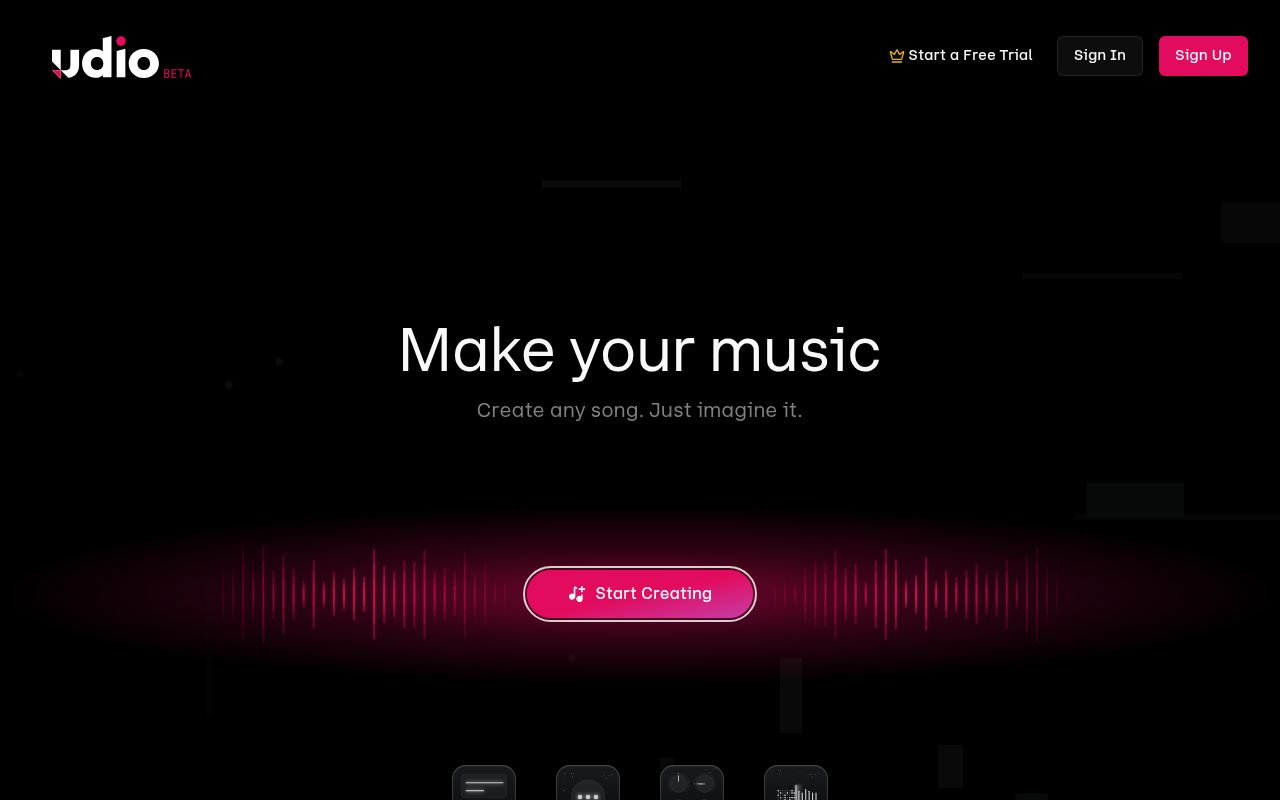
Udio is the right first stop when you care about song-shaped tracks: melody, arrangement, and vocals in one prompt-driven flow. Creators use it for drafts, demos, and royalty-aware experiments. Treat outputs as starting points you still need to check for rights, brand fit, and quality before publishing.
Suno
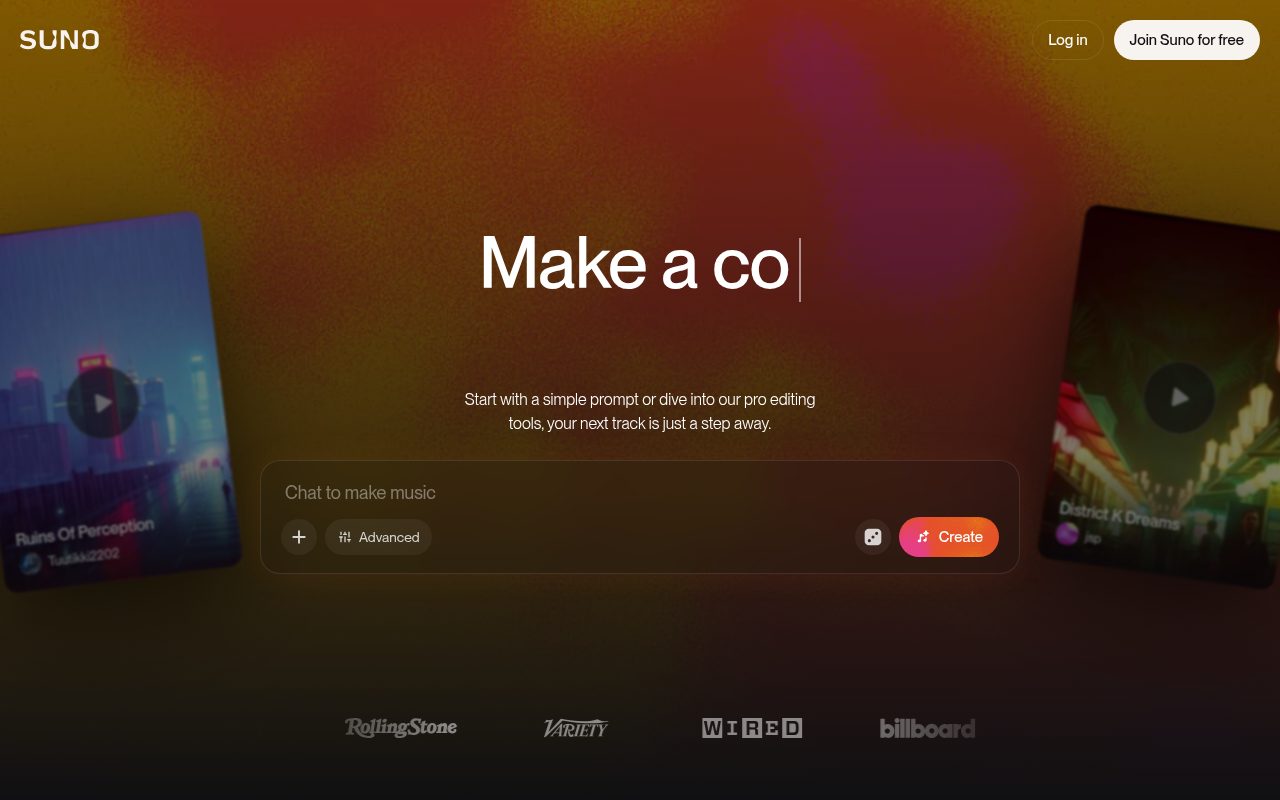
Suno wins when you need options fast - ten ideas before lunch. Text-to-song generation with vocals and instruments makes it a strong sketchpad. If your bottleneck is speed, Suno is usually the lighter on-ramp. If you need something closer to a finished song, compare side by side with Udio on the same brief.
Soundraw

Soundraw is for beds and soundtrack work more than vocal pop demos. Reach for it when you need editable instrumental energy under talking, demos, or ads - not when you are trying to write a lead single.
Riffusion
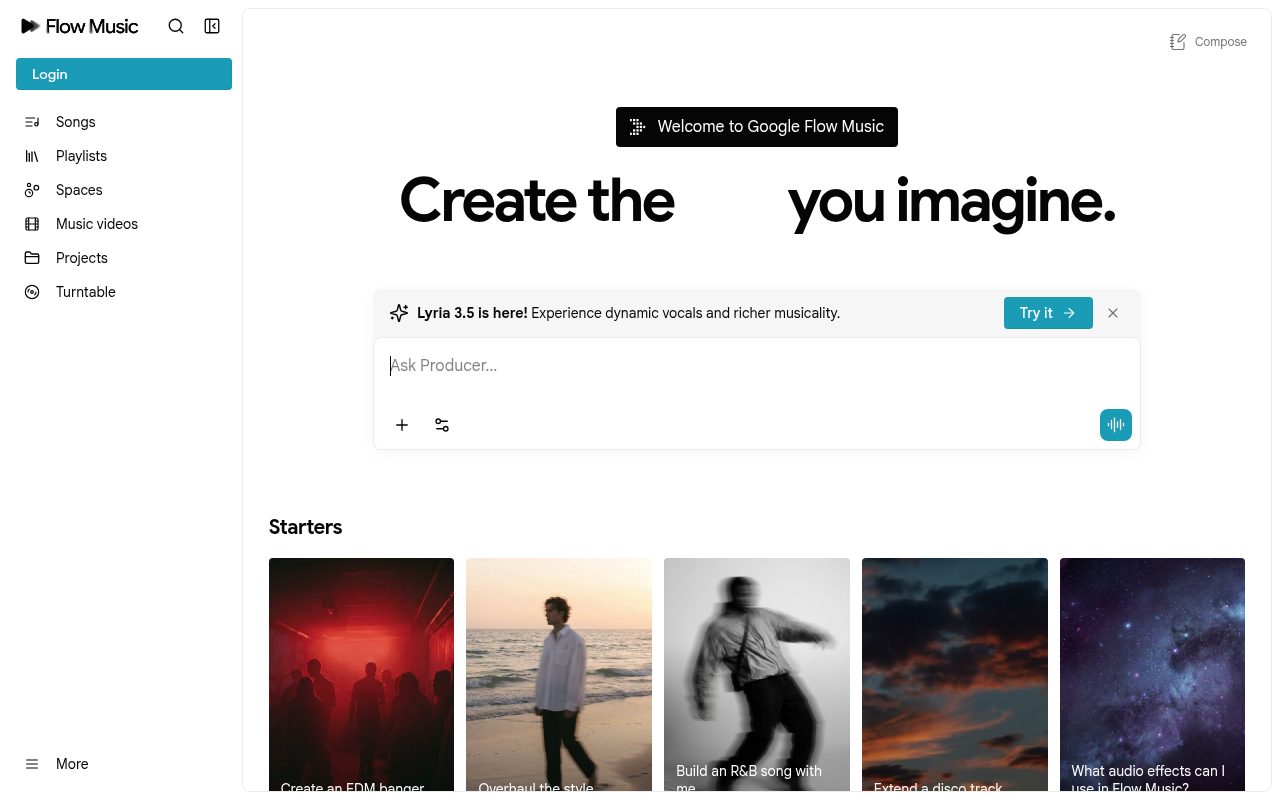
Riffusion stays in the experimental bucket. Useful for curious producers and people who want weird, promptable textures. Weaker if you need predictable commercial deliverables on a deadline. Keep it as a creative side channel, not your only music system.
PhonicMind
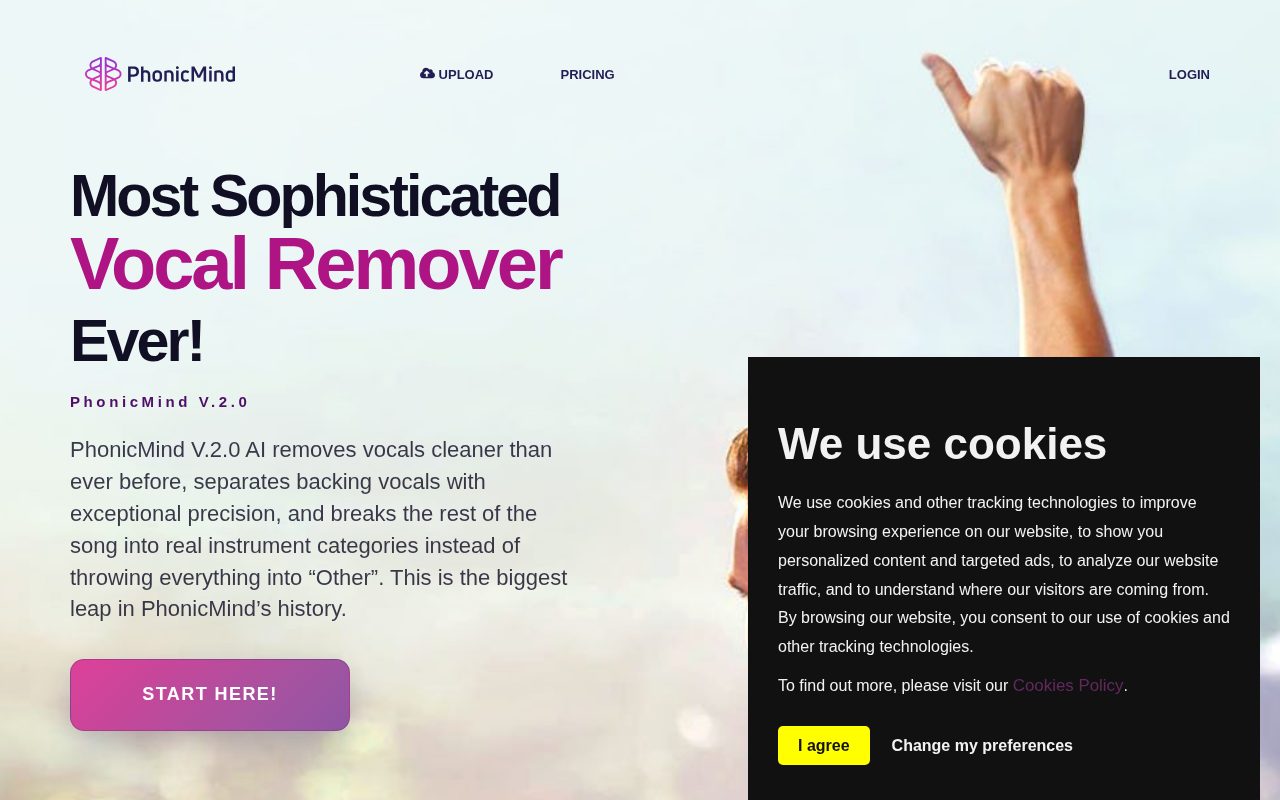
PhonicMind is for stem separation, not generation. It isolates vocals, instruments, and related stems from existing audio. Put it in the workflow after you have a track - for karaoke-style pulls, remix prep, or cleanup - not at the blank-prompt stage.
AI Mastering
AI Mastering is for final polish, not composition. It masters mixes you already made or exported from Udio, Suno, a DAW, or elsewhere. Use it at the end of the chain when loudness, balance, and release polish matter more than writing another melody.
Udio vs Suno
Same brief. Two generators. Pick the one that wastes less of your afternoon.
| When | Reach for |
|---|---|
| You want song-shaped output closer to a finished demo | Udio |
| You want fast options and ideation volume | Suno |
| You are comparing structure, vocals, and arrangement feel | Run both, then keep the winner |
| You only need a bed under talking | Skip the duel - use Soundraw |
Blunt rule: if the deliverable sounds like a song, start the duel. If the deliverable is background, do not force a song generator to behave like a bed tool.
A simple workflow
- Generate the core idea in Udio or Suno from the same short brief.
- Optional beds in Soundraw when you need controllable instrumental energy under talking or demos.
- Optional experiments in Riffusion when you want weird textures, not a client-ready chorus.
- Stems in PhonicMind when you need vocals or instruments pulled apart for remix, cleanup, or karaoke-style work.
- Master in AI Mastering when the mix exists and you need release polish - loudness, balance, finish.
You do not need every step every time. Most creator drafts stop after step 1. Add tools only when the job actually requires them.
How to choose
- Decide the job: full song, bed, experiment, stem, or master.
- Run the same short brief in Udio and Suno if songwriting is the job.
- Add Soundraw only if you need controllable beds.
- Add Riffusion only if you enjoy experimental passes.
- Add PhonicMind or AI Mastering only when you already have audio to process.
If music tools are a distraction from a bigger AI systems problem, run the Creator AI Scorecard and browse the AI Tools directory with a clearer filter.
Bottom line
For best AI music generators 2026, the honest short answer is Udio or Suno first. Soundraw and Riffusion cover beds and experiments. PhonicMind and AI Mastering complete the production lane without pretending to compose. No invented pricing - verify plans and license terms on each tool page linked above.
If the real bottleneck is voice, workflow, or memory across the business - not another music subscription - start with the Creator AI Scorecard before you stack more tools.
Related tools and reads.
Udio
Strong starting point when you want complete, song-shaped AI tracks.
Open resource → // AI toolSuno
Fast text-to-song ideation with a generous free experimentation path.
Open resource → // AI toolSoundraw
Useful when you need editable beds and soundtrack-style music.
Open resource → // AI toolRiffusion
Experimental generation for people who want to play with novel music AI.
Open resource → // AI toolPhonicMind
Stem separation and isolation, not composition from a blank prompt.
Open resource → // AI toolAI Mastering
Online mastering for finishing tracks you already composed or generated.
Open resource → // PageAI Tools directory
Browse the wider audio and AI stack beyond this roundup.
Open resource → // PageCreator AI Scorecard
Diagnose whether music tools are even your bottleneck before you subscribe to five of them.
Open resource →Frequently asked questions.
Udio vs Suno - which should I try first?
Run the same short brief in both. Pick Udio first when you care about song-shaped, closer-to-finished tracks. Pick Suno first when you need fast options and ideation. The winner is whichever gets you usable audio for that brief with less fighting.
What is the best AI music generator in 2026 for complete songs?
Start with Udio when you want fuller song-shaped outputs, or Suno when you want fast ideation. Both are song generators; pick based on whether you care more about finished-feeling tracks or rapid experiments.
When is Soundraw better than Suno or Udio?
When the job is a controllable bed or soundtrack under talking, demos, or ads - not a vocal-forward song demo. Soundraw is editable instrumental energy. Suno and Udio are the song generators.
Are stem and mastering tools AI music generators?
No. PhonicMind separates stems from audio you already have. AI Mastering finishes a mix. They sit after generation in the workflow, not at the blank-prompt stage.
Can I use AI music commercially?
Sometimes - and the answer changes by tool, plan, and license language. Do not guess from a blog post. Check each product's current commercial / royalty terms for the plan you are on before you publish, monetize, or hand work to a client.
What about free tiers on these tools?
Most of these products market some free or trial path, but limits move. Confirm what is free, what is watermarked, and what is commercial-ready on the product page for Udio, Suno, Soundraw, and the rest before you plan a release around it.
Is Soundraw an AI music generator?
Yes. Soundraw is strongest for customizable beds and soundtrack-style tracks rather than vocal-forward complete songs.
Jim Carter III
AI Strategist and Systems Architect. Building leverage-first AI infrastructure for premium brands and top creators.
Read the whole story →CTRL+ALT+BUILDTM
The weekly letter behind these field notes - AI strategy, tool verdicts, and one clear next action every Tuesday. A whole community of operators builds behind it.
Join the letter free →// the.system - how.it.fits.together
- Learn The Education Hub - free guides and essays. // you.are.here
- Diagnose The Creator AI Scorecard - your bottleneck in 10 minutes.
- Equip The field kit - every AI tool I trust, reviewed.
- Climb Services - four camps from free to working with me.
The letter ties it all together - CTRL+ALT+BUILDTM, free every Tuesday →